
Episode 5
Omer Har
Explorium Co-Founder Omer Har on Leaving Microsoft Research, Why AI Agents Need External Data, and the Future of B2B Signals.



Subscribe and listen anywhere:
KEY TOPICS
0:00 - Leaving Microsoft Research to build Explorium
1:51 - The real bottleneck: Buying and integrating external data in production
3:45 - How AI changed data collection for B2B and B2C signals
6:58 - Role models and why Anthropic is leading the AI ecosystem
9:38 - From researcher to manager: The shortcut that led to entrepreneurship
12:52 - What is external data and why does it matter for AI agents?
14:50 - The biggest pain points for go-to-market AI builders
16:40 - Letting AI agents choose their own data endpoints
18:20 - Adapting to the speed of AI and the "vibe coding" paradigm
21:15 - The taxi driver analogy: Why every company must adopt AI
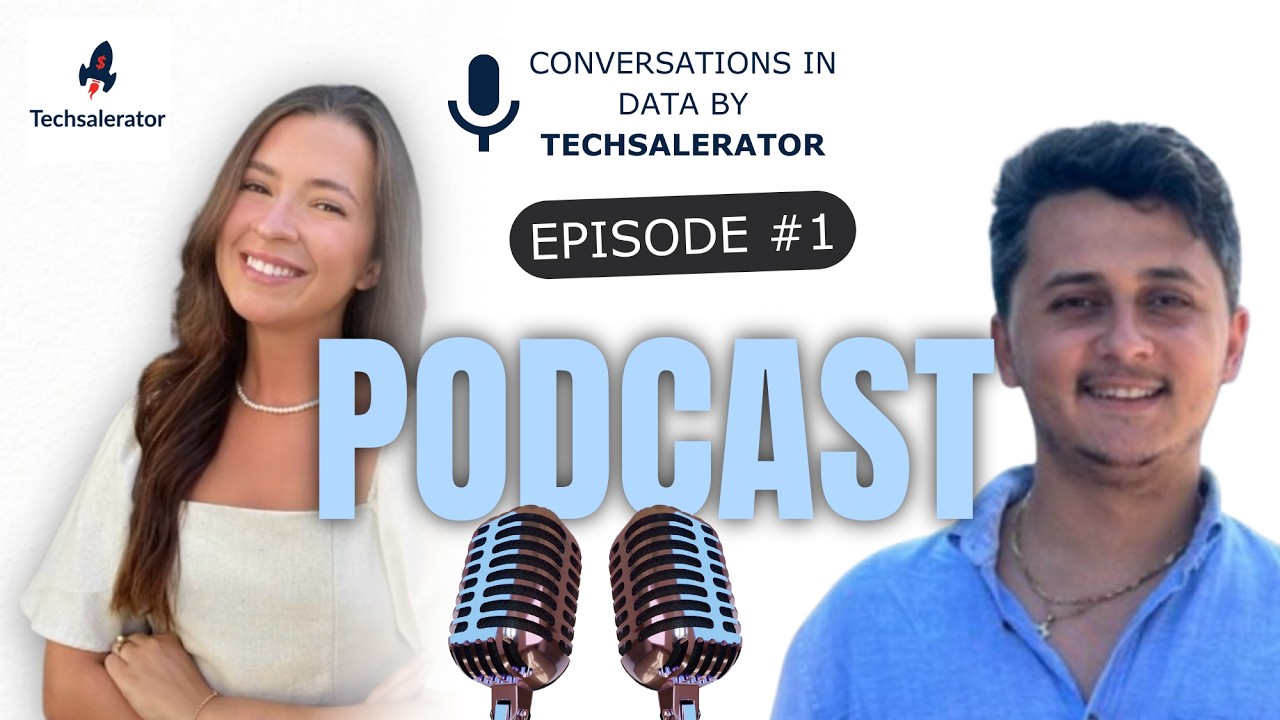
In this episode of Conversations in Data by Tech Accelerator, Head of People Clara sits down with Omer Har, Co-Founder of Explorium. After starting his career at Microsoft Research in Cambridge—one of the most prestigious data science environments in the world—Omer took an entrepreneurial leap to solve one of the most frustrating bottlenecks in tech: buying, integrating, and deploying external data in production. He shares the origin story of teaming up with fellow data experts from Israeli military intelligence to build a platform that has evolved alongside the massive shifts in machine learning.
Omer breaks down how the rise of AI is radically changing data engineering. He explains how Explorium shifted from a human-centric data model to feeding B2B external data directly into AI agents, allowing those agents to autonomously choose which data endpoints to pull from. From the concept of "vibe coding" and the necessity of rapid testing to a stark warning about the companies that refuse to adapt, this episode is a masterclass in navigating the bleeding edge of the AI and data landscape.
The conversation continues with:
Subscribe for more conversations with the leaders, builders, and innovators shaping the future of data.
#ConversationsInData #TechAccelerator #Explorium #ExternalData #ArtificialIntelligence #AIAgents #DataScience #B2BData #Founders
Clara (0:00): Started his career at Microsoft Research in Cambridge, one of the most prestigious data science environments in the world, then walked away to build a startup. Bold move always. Today, Explorium, the said startup back then, is redefining how agents find and use external data. Omer, welcome. I'm so excited to chat with you today.
Omer (0:22): Hi, Clara. Same here. Very exciting and happy to have a chat.
Clara (0:26): Yeah, absolutely. Again, thanks so much for joining. And let's start with the original story. You built Explorium alongside Maor and Or, two of them who came from the Israeli military intelligence world and then you came from Microsoft Research in Cambridge. How did three people with such different paths end up building the same company?
Omer (0:47): That's a long time ago. That's already eight years ago. Um, so we all knew each other before. I happened to meet with Or and he was looking to build something and I was as well after Microsoft. After research I spent a few years in ironSource kind of leading the data science team and then when I thought about what the next step was I felt that taking the entrepreneurial journey might be interesting and I kind of started looking for partners and for ideas and I met Or and Or knew Maor and then we all came together to kind of, you know, start the startup. But that was a very long time ago. It seems like a different life already.
Clara (1:31): Yeah, I know. Time passes and then I think that all the time as well. When you have a memory sometimes and you're like, wow, that was a long time ago, that's a little scary. But I bet that you just got that feeling.
Omer (1:44): Yeah. Like a wow, that seemed like a different life.
Clara (1:48): Yeah. So that's awesome. Anyways, every founder has a moment when the real problem shows up and clicks. For you, when did it become obvious or not that the biggest bottleneck in data was in the data itself? It was actually buying, integrating, and using external data in production.
Omer (2:08): I think that's a good question. Both in ironSource and also before in Microsoft I needed to use external data and I worked with many different data vendors and kind of stitching together multiple data sets in order to build models and those type of things. So there it was clear that it's very difficult to actually do that. So when we got together, all three of us had a strong data experience. All of us are experienced in data and know how painful it is to work with lots of data. So it was obvious that this was part of what we should do. Maor actually came up with the original idea. He actually built a prototype that we could then play with. Back then it was the right way. Many things changed during those eight years and from then we kind of switched into focusing on machine learning and then we focused more on go-to-market and now we're focusing on kind of the best of both worlds—on AI on one side and then how to provide data to AI and agents on the other side.
Clara (3:12): Yeah. And you know, working with data it is a little still time consuming and it takes a lot of hard work. You know, our people are online 24/7 handling the data sets and delivering it and using all the tools to make it perfect but of course right now we have machine learning like you said, AI makes it much easier. I cannot imagine how hard it was 8 years ago compared to what it is now. If today it is time consuming, I don't want to hear how time consuming it was back eight years ago.
Omer (3:45): So I think the interesting piece is if you think about AI, now AI lets you collect other types of data and I can give examples in a few minutes, but I think that if you think about handling data itself, the data engineering behind that didn't change a lot. I think that the main pivot was actually more than 8 years ago with the introduction of Spark and Databricks and those type of companies that allow you to actually handle data at scale. But I think what AI gave us is the opportunity to collect actually very different types of data sets and very niche things that were simply not economical before. So before AI was here, if you wanted to know as a data provider whether or not a specific company is a B2B or B2C company, the only way you could have done that without AI is start building a very complex system that will try to identify keywords and try to predict whether or not a specific page or website talks about a company which is B2B or B2C. With AI it is super simple. It lets you as a data provider and also our customers as data users get very different data points which are very useful for them. Think about how do you do qualification? Up until I would say two years ago, people went into website after website and checked whether or not this is a B2B or B2C. We even had a customer that wanted to know... he's specifically selling through gyms and he wants to know if the gym has a yoga class or not. Why? Because they have some component or module for that. Up until 2 years ago, they manually went website after website for gyms and looked to see if they have a yoga class. Today it is very easy doing that with AI.
Clara (5:41): Yeah. And in a much more mundane way, you know, a couple months ago, I was still in New York and what did I want to eat? I wanted to have a croissant breakfast sandwich. I just wanted to have a croissant breakfast sandwich with bacon, egg, and cheese. Classic in New York, right? And then I thought, where in this town can I get it? How far is it? You know, I thought so many questions. And then I thought, okay, I can ask my friends who have lived here for 25 years or I can look up on Google or I can just ask ChatGPT, "Where can I find a bacon, egg, and cheese on a croissant in Long Beach, New York?" And then it gave me all the options. And then I got what I wanted in 30 seconds. Of course, that takes away from the human connection that I could have texted my friends and waited 30 minutes to an hour for them to answer until I could get my breakfast sandwich. But yeah, that's you know, now you can do things much faster.
Omer (6:41): But now it's opened up more time for you to actually have a human connection, not asking questions about sandwiches. It's time saved that you can now spend with friends and family. So it's a good thing overall.
Clara (6:56): But um anyways, let's talk a little bit more about your role models and inspirations. You know, sometimes we have them, sometimes we have ideas on our own. Who were the people or companies that inspired you the most as you were figuring out this space? Who were you watching and thinking, okay, that's the kind of thing that me and my partners want to build?
Omer (7:18): That's a very interesting question. I didn't think about that for a while now. I think that back when we started, the focus was on a company named DataRobot. It was back then in the height of their success. We thought this is a really cool company to kind of run and they know what they're doing and so on. I think over the last years, they're still around, they're a great company, but I don't think they're in the height of their success anymore and I don't perceive them as role modeling in that sense. We also shifted toward other areas. But I think over the course of the last eight years, it feels like a different person, I'm a different person. I think there are different companies and focus areas that I would think about at this particular point. I think Anthropic is doing an absolutely amazing job pushing out their AI. And I think it's not about making... and Anthropic is very clear about that... it's not only about making the model better so the LLM will be smarter, but it's also building the ecosystem around it. We're part of that ecosystem. We see a lot of success just being in their ecosystem and I think it's very interesting and exciting to see what they're pushing out and actually enabling anyone to use AI in any creative way that you can think about. So, you know, if I need to answer that now, 8 years later, it's probably Anthropic.
Clara (8:54): And we evolve, right? You know, things change, we evolve, products evolve, companies evolve. Saying that Anthropic is doing an amazing job is an understatement. I almost want to unfollow them on LinkedIn because I just can't keep up. It's like every second of every day. Like "Look at this. This is a new insane highest tech you could possibly imagine thing that just released. Enjoy." And then I'm like, I have so much work. I can't keep up. And then you know, it gets to the end of the day and you go use Claude, let's suppose. And it's fantastic. Like I said, an understatement, but thanks for sharing that with me. Now, you know, you left a senior applied researcher role at Microsoft, one of the most prestigious positions in data science really to go build a startup back eight years ago. But what did the people around you think back then? And did you have any doubts like how you went from somewhere that was stable, you know, stable paycheck, stable work to start something again?
Omer (10:02): Before that I spent a few years in ironSource. So I actually started Explorium after ironSource and not after Microsoft. But I think the same idea... just leaving Microsoft was a big decision. We were in Cambridge, we had two small kids back then. But I think one of the things that I was interested in and thought was relevant... I always felt that I'm an okay developer and I'm an okay researcher, but I'm a much better manager. I think you should talk to people that I manage to verify that. But overall, I think my true value is in leading teams. I provide more value. So, I wanted to take the management track within Microsoft Research, which is pretty slow. Microsoft as a whole is a slow progression. And I wanted to see if I could have a shortcut, which you shouldn't ever try, but at that point it was interesting. And that's what I did. I actually left Microsoft just to lead in a smaller company—back then it was Supersonic which was bought by ironSource—and then I felt confident enough to build something on my own. So you know, I just needed the confidence I guess.
Clara (11:19): Yeah. Well, first of all, you do a reference check with your employees who report to you to see how good of a manager you are.
Omer (11:25): I'm not sure that they will say the same, but at least I feel that way. Maybe they don't. Let's just be honest about that.
Clara (11:38): Let's be clear. But yeah, no. And you know, taking shortcuts, they feel good. You know, shortcuts feel good and sometimes we just want to go for it and that's okay. About the progression into bigger roles at Microsoft or any big enterprise... it's just standard, right? What might take me 5 years to do in a startup can take 15 years to do it there.
Omer (12:03): Just to be clear, I loved Microsoft Research. I had a really good time there. In many cases I look in nostalgia to that time, not only because of the work but also just me and my wife and the kids in Cambridge without the bigger family. So it was a different time and it was very nice for a long while, for almost 5 years. But I'm not regretting leaving. There's different things and different experiences that you should do or you want to do and I'm happy that I had the chance to do it.
Clara (12:43): Yeah. That's going to be the headline of this episode. But now let's get into the present. Explorium. Let's chat about it. For someone here or our audience hearing it for the first time, what is external data? Why does it matter for business outcomes and why is it so hard to actually use?
Omer (13:07): That's a good question. So external data is anything that does not belong to the company or to the system that the company runs. So if a person had a chat with your sales guy and this was recorded in Gong or any call recording app, then this is your first-party data. This is something that you create and is owned by you. However, if you want to know news or an event that happened to a specific company and you know that through a news stream or through social media, that is actually what we call external data or third-party data which is collected from the open web as a starting point. But there's other places you can collect as well to give you insights about a person. And when you say external data it can be anything. It can also be about an individual... just not even the professional hat of that individual, as a person he likes football and stuff like that. It can be about maritime information, how much shipping there is and so on. Specifically, Explorium is focused on B2B data for go-to-market use cases. So specifically around sales and marketing, our focus is around businesses and around people that work in those businesses, employees, and we provide companies with insights about their target customers and so on. Our focus is specifically to provide that type of data to AI agents. This is a focus that we had in the last two years. How can we make sure that any AI agent that needs that type of information in order to complete its task successfully can do that easily with Explorium? So, it can connect to our platform and get all of the data that it needs, any type of B2B data that it needs, and it can do that quickly and easily.
Clara (14:50): Okay. And what does it look like when you walk into a new customer? What are the biggest pain points that you hear over and over and over? What are they struggling with and what do they sometimes not even realize that they are struggling with?
Omer (15:04): Yeah. So I think that many of our new customers are what we call go-to-market AI builders. Think about an AI SDR company as an example. Those types of companies need to use a lot of different types of data. So they have one customer that is selling to enterprise. So they need just the 10K and information about public companies. They have a different customer that actually sells to SMBs. So they need to know more about food chains or restaurants. So every customer has a different need and associated with that are different data needs. So those types of companies need a breadth of data. They need to be connected to lots of different data points. That's one of the first pain points. The second piece is about actually connecting or integrating with Explorium. We offer different types of integrations, from MCP to CLI to API, basically different ways that their agent can interact with the data asynchronously. And obviously they need quality data. Usually we go in when they have pain points with at least one or two of those three issues and then we know how to solve them.
Clara (16:16): Okay. Thanks for sharing that with me, a little bit more about the problems that the clients face that they come to Explorium with. Very interesting and such an impressive work that you're doing helping those companies with these agents. But you've said before that the approach to data management must always start from the business problem, which makes sense... predicting which leads will convert, which customers will churn, which loans will default. Companies still collect data first and ask questions later. Why does that keep happening?
Omer (16:46): So working with data is challenging, especially with different types of data and trying to harmonize different types of data into one... it's hard. So we do see a lot of companies that are not using the data they should, but the data that they have. So they have access to A, B, or C attributes, they're going to use that instead of trying out and looking for a different approach. I think that AI actually changed the game there. Because if you give the agent access to any data points and ask it just to do whatever you need, the agent can actually look at all of the data available and make a decision what type of data it wants to use. So instead of the person having to say, "Well, it's very difficult to harmonize multiple data sets," the agent can actually connect to companies like Explorium and say, "Well, I have 30 different enrichment endpoints I can use. I see that enrichment C, technographics, might be very important for my particular task," and then it can use that. So the whole approach that we started with, which was more human-centric—how humans use the data—converted about two years ago into how agents and AI can use the data in order to get tasks completed.
Clara (17:59): Yeah, and I like that you said that it shifted two years ago into how AI uses it, but at the end of the day, the people are going to consume what the agent is helping them with. So, it's still focused on people. It's just done in a different way, which is essential in my opinion. So, thank you for sharing that with me. Wrapping up now, talking a little bit more about right now, what things are happening in the world. We're living through a lot, right? Like we were saying about Anthropic releasing news every millisecond of every day. It's a lot. Economic uncertainty, geopolitical shifts, the AI race, the data race now that honestly just started in my opinion. How does the state of the world actually affect your daily decisions as a CEO?
Omer (18:45): That's a good question. So I think that because we're highly involved in the ecosystem around AI, we're always looking and researching what can we do with the data and how we can enable agents to use our data. So we're really on the cutting edge of what that means to work with agents. So it's super exciting. It's moving way too fast as you said before. But I think one of the things that I like about it is that you need to start thinking differently. You know, "vibe coding" is a great example of that. I'm a technical person. I spent the last 20 years or so working with devs and building systems, and it's super important that the system will be well designed and well architected and then it will be well tested and well maintained so everything will run smoothly and so on. But I think that AI actually changed the paradigm. Yeah, in a sense, it's not too bad to have something that is not fully 100% well architected just to be out, just to start testing and see if that actually works. In my experience, it's about one or two out of a 100 ideas is actually a good one. I don't know what that says about me, maybe people have much better ideas than me, but from my book, I can have a hundred ideas. Most of them are bad. So, the ability to actually test quickly... I understand that the quality is not there yet fully, I understand that this web page could be better, but let's see what happens when people start to interact with it or agents start to interact with that and see how that's tested. So I think the idea is AI changed the way we think and allowed us to do different things and we need to adapt and we need to adapt quickly as everything grows very quickly. So I think this is how we think today... we change everything into: How can we do that differently? How can we do it faster? How can we do that using AI? How can we do that better?
Clara (20:47): You have to adapt. It's something that you might not want to accept. You want things to be the old school ways. There's a lot of hesitation to make a change and to stop thinking the way that you used to and start thinking in a new way. It's very difficult sometimes for some people, me included. So, you have to adapt and when you do, the other side looks very nice. So, it's a good thing to do. Now, thinking about different companies, what they do, their product, do you think that all companies will stay behind if they don't use AI in all fields? Because there are some fields, let's suppose property management, do they need too much AI? Do you think that they'll stay too much behind? I know a lot of old school property management companies.
Omer (21:33): So the quick answer is yes, they will stay behind. I had a good example of that. About three or four months ago I took a taxi in Tel Aviv from one place to the next and I had a chat with the driver like, "How did you get here?" talking about his life story, and he's been a taxi driver for I don't know, 30 years. And I said, "Are you not concerned from autonomous driving?" "No, autonomous will never get here." And I think that 15 years ago, we always thought about autonomous driving: "Next year, everything will be autonomous." It will take some more time, but it will get there. It will get to a point where you won't drive and there will be cars that will take you from one place to another. So I think that will be also true with general AI from that perspective. Property managers... it might be that they can handle some of the tasks manually and not use AI. However, those that will use AI will have an advantage over those that don't. It's clear today that AI will replace some positions or some types of professions. But it's not just "AI will replace your job"—it's someone that uses AI will replace your job and that's it. So you should try it at least.
Clara (23:01): You should adapt. This was very informative. I loved learning more about Explorium, about you. So thank you so much for joining. For the audience, follow Omer, Explorium, see what they're up to, and thank you for joining again today.
Omer (23:17): Thank you for having me. Thank you. It was a really nice time. Thank you.
Clara (23:20): Yeah, of course. All righty. Have a good one and I'll see you next time.

.jpg)
.jpg)