
Episode 4
Brad Schneider
Nomad Data CEO Brad Schneider on Institutionalizing Data Procurement, the DRM Revolution, and Why Operational Chaos is the Enemy of AI.



Subscribe and listen anywhere:
KEY TOPICS
0:00 - The importance of building data infrastructure for competitive advantage
2:05 - Brad’s transition from data buyer to infrastructure builder
2:54 - Problems of finding and managing external data in finance
3:29 - Lessons learned from Tiger Management's culture and decision process
6:22 - How Nomad simplifies data discovery and vendor outreach
9:34 - The Data Relationship Manager (DRM): purpose and benefits
12:50 - Why data procurement systems took so long to develop
15:00 - AI’s impact on external data management and licensing shifts
19:02 - How the DRM streamlines vendor onboarding and contract management
22:30 - Navigating startup challenges during the COVID pandemic
24:02 - Applying Wall Street discipline to product development
26:40 - Building an integrated decision framework from varied experiences
29:30 - Risks of manual data relationship management and operational breakdowns
32:03 - The debate: Do companies have enough data or just underutilize it?
34:27 - Nomad’s future focus: AI agent integration and autonomous data management
35:39 - Key advice for data leaders building scalable data processes
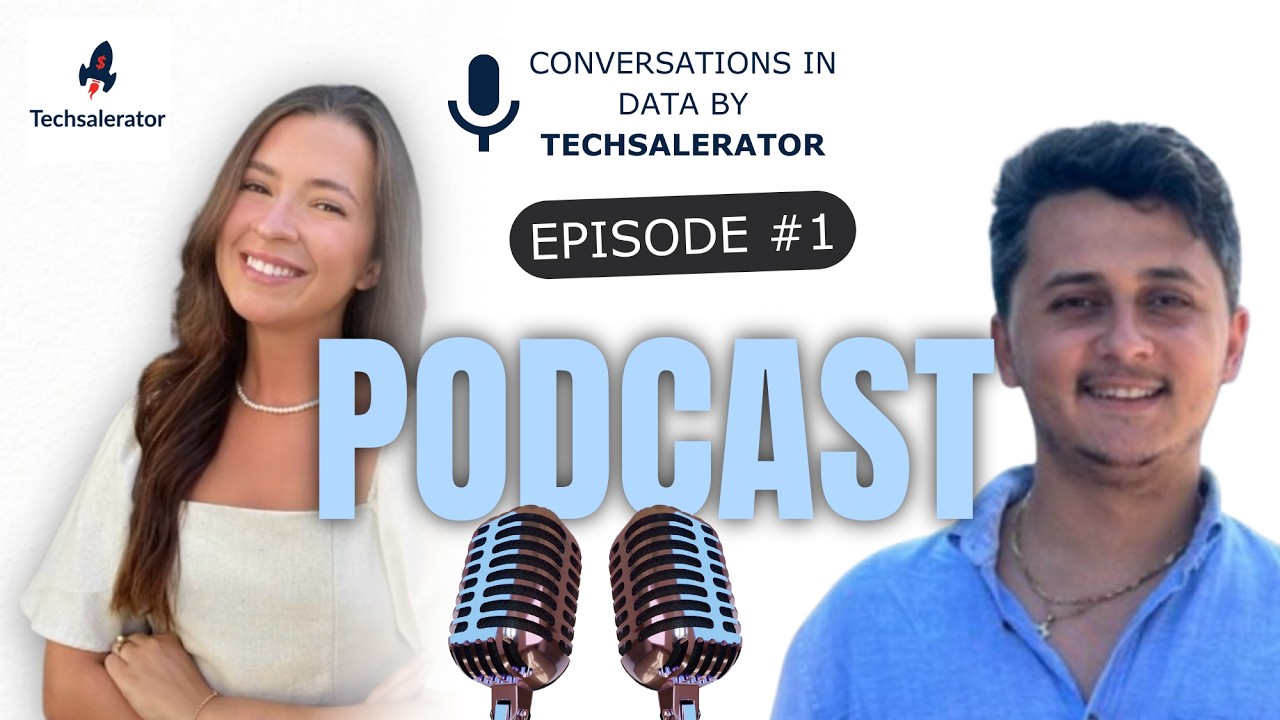
In this episode of Conversations in Data by Tech Accelerator, Head of People Clara sits down with Brad Schneider, CEO of Nomad Data. Brad shares his journey from being a power buyer of external data at Tiger Management and Jericho Capital to building the infrastructure the entire industry was missing. He explains how buying the exact same data as everyone else erodes competitive advantage, and why true edge comes from making external data findable and manageable through a centralized system.
Brad breaks down the evolution of Nomad's platform, moving from a marketplace connection tool to a comprehensive Data Relationship Manager (DRM). He reveals the operational chaos of managing data through spreadsheets and emails, how the DRM institutionalizes knowledge, and why rigorous data processes are the ultimate prerequisite for an effective AI strategy.The conversation continues with:
Subscribe for more conversations with the leaders, builders, and innovators shaping the future of data.
#ConversationsInData #TechAccelerator #NomadData #DataInfrastructure #DataRelationshipManager #DRM #ArtificialIntelligence #DataStrategy
Brad (0:00): If you institutionalize any process, if you build process, you're going to have a better outcome. You know, whether it's in data acquisition, whether it's, you know, researching potential investments. That is so key is, you know, when you reach a certain point, you have to formalize a process. You have to have a process or whatever initiative you're working on is not going to be successful over the long run.
Clara (0:20): Brad Schneider lost and made real money based on data and then built a platform the entire data industry was missing. Brad, welcome to Conversations in Data by Tech Accelerator. I'm Clara, head of HR, and I'm so excited to have you join us today.
Brad (0:35): Great to be here, Clara. Thank you.
Clara (0:37): Yeah, absolutely. So, let's get into it. You spent over a decade using external data at Tiger Management and Jericho Capital to find investment edges nobody else had. At what point did you flip from being a power buyer of data to actually thinking the real opportunity is building infrastructure that makes external data findable and manageable in the first place?
Brad (1:01): Well, I mean, I was in the data industry before you could even buy data. I mean, back in the early days, you had to create it all yourself. And so, through the process of creating it, I started to realize how many different incredibly useful types of data there were. A handful of those types of data got monetized, turned into companies, but there still remained so much data that was a lot harder for folks to find. It wasn't knocking on your door. It wasn't trying to sell itself to you. It didn't have 30 person sales teams. So, this is when I was at Tiger. This was, you know, it's been about 10 years now. But started to see everyone else get interested in data and they were all ending up with the exact same data. And Wall Street is all about having differentiation, having an edge. Only buying the same thing everyone else is buying doesn't create advantage. And so we wanted a way where an analyst could be smarter than another analyst, could work harder and produce a different outcome. And again, if everybody just has the answer sheet to the test, nobody's going to do better or worse. And so we felt that analysts and portfolio managers needed a way to differentiate themselves and be able to do more work. And so that was sort of what gave birth to a series of companies that I started.
Clara (2:13): Yeah. The series of companies that you've started, it's something that I wanted to get in. After actually building and selling Adaptive Management, you went right back in. Most founders take a breath and exit. What was pulling you back to create something new again?
Brad (2:28): I just didn't feel like we had completely solved the problem yet. I mean, this is a big challenge. There's a lot of different pieces to it, a lot of nuance, and we had addressed one piece, but to step back a little bit, Adaptive Management was really about helping folks who had purchased different data sets, help them combine those data sets, visualize them to help understand the world. And through the process of doing that, we realized that where people were really struggling was they didn't even know what data to go out there and get, what data to buy, what data to create or scrape or what have you. And so, you know, we saw the problem was earlier in the process than where Adaptive sat. And so, the original idea behind starting Nomad was we wanted to get closer to where the actual problem was, which was, okay, I'm looking at this company. I'm looking at this market. I need a better view on this thing. Where do I even go? Like, where does my data journey even start? We were kind of at the end of that journey. And so, that's how we got there.
Clara (3:27): But getting into a little bit more about Tiger Management, it was famous for being one of the most demanding, high-performing investment environments on earth. Really, what did surviving that culture actually teach you about building a company? And what did it teach you about how not to build one?
Brad (3:44): I mean, I joined Tiger later in my career. You know, I learned a lot of the what not to do lessons, I'd say earlier, but Tiger was an incredibly accomplished, incredibly intelligent, you know, rigorous group of people. You know, one of the things that I really enjoyed about Tiger is they would bring together all the portfolio managers. I think it was once every other week we would have lunch with Julian and people would talk about ideas, they'd talk about companies, the economy. And so seeing how other people, and not just anybody, these were the best of the best. Seeing how those people sort of worked through a thesis, you know, how they got conviction on different ideas was very illuminating. You know, it's not just like reading an article on a website. These were the people that were placing billion dollar bets on things, and walking through their research process, how they put together that thesis, built that conviction. That was an incredible learning process. I certainly knew about my own process. I knew, you know, a handful of other people I'd worked with, but to see this was, you know, probably 20 or 30 different Tiger cubs, Tiger spinouts, it was just incredibly illuminating to different ways to look at different investment situations.
Clara (4:52): Yeah. No, and then you're in that room with, you know, you're having lunch and you're in those rooms with those incredible professionals that are taking just like you said, million-dollar bets and...
Brad (5:02): Billion dollar bets.
Clara (5:04): Yeah. Literally. So very interesting to hear and thank you so much for sharing this with me and the audience. I feel like a lot of times we don't know what's going on inside those environments and doors. So I really appreciate it. But now let's get into you when building Nomad. When you first started pitching Nomad Connect, the matchmaking layer between data buyers and providers. Did buyers get the problem immediately or did you have to convince them the pain was real before you could sell them what to fix?
Brad (5:36): I would say it wasn't that hard because the pitch was simple. You know, the idea behind Nomad's Connect product was that you don't need to know anything about the world of data. You just need to understand what is the thing that you're trying to gain more information about. So, folks that were not data savvy didn't really have a tough time coming in and explaining, you know, I'm looking at this hotel chain. Here's the particular thing that I'm trying to understand better. You know, repeat room nights or competition versus another chain. Who can help me? Who has data that will provide visibility into that? And so the Nomad platform, you know, when it first started, we had about 300 different vendors, Tech Accelerator being one of the early ones. And we would basically look at that request using AI. Even back when we started, we were using some of these generalized pre-trained transformer GPT models that are very popular today, we were using them to look across a vast array of different data vendors to figure out the likelihood that they had data on this particular thing. But sort of the magic of the Nomad platform is that it would go out and email the vendor. So Tech Accelerator has received dozens of emails from Nomad saying, "We've got a client that's trying to answer this question. Does your data do that? Can your data help?" And as simple as this sounds, what it really is is it's data collection. We need to collect more data on which data can solve which problems. And so people liked that piece of it where they could just type in one question and it would query, you know, across hundreds of vendors initially and today we've crossed about 5,000 vendors on the platform. And so it's just a very quick way to get a pulse of, you know, does this data exist? Is it out there? And then be put in touch with those vendors.
Clara (7:16): Yeah, you need the data and you need to simplify it to the client on ways that, you know, they will be able to understand. So we do that every day here at Tech Accelerator. So thanks for sharing that again.
Brad (7:29): Of course.
Clara (7:30): And about the clients that you were pitching in the beginning, were those mostly enterprise teams or smaller data hungry companies?
Brad (7:37): I mean initially it was primarily investment firms. It was private equity funds, hedge funds, it was the data teams, it was sort of data savvy analysts that were using us. And that's sort of how we got our start.
Clara (7:51): Okay. Got it. Got it. Thanks for sharing that. And Nomad started as a marketplace Connect and has evolved into something much bigger now that you call the Data Relationship Manager. For someone who hasn't heard that term, what is a DRM and what does it exactly replace or fix in the day-to-day life of a team that buys and works with a lot of external data?
Brad (8:12): Yeah. So something that we saw very early is that the data knowledge was extremely siloed in companies that bought data. One person, you know, had the challenge that they basically asked someone else to go source data to solve. That person scoured the web, scoured lists to find some people to talk to. Someone else did the talking, someone else did the contract, someone else did the testing. And so it was very disconnected and any one person had no idea where the data was in the purchase process. What test did we run? Why did we buy it? Why did we not buy it? Who's using it? What license do we have? There's just so much information and then someone would leave and then that information was lost forever. And so really the idea behind the DRM was that data acquisition needed a purpose-built procurement platform where it would track everything from first contact all the way to license renewals. It would help folks within the firm. Let's say you buy a 100 data sets. You have the same discovery problem internally. What data set does this? How can I find data on that? And so the DRM, eventually we added AI features where anyone at the company, it's almost like a talking data catalog. You can ask it you know what data do we have on daily oil fluctuations or output volumes from XYZ country and it would go through and see well you know you talk to this vendor on this date you purchase that data set and it would answer all those questions for you which was incredibly useful and it was a way to sort of contain all that knowledge. And so that product has done I'd say even better than Connect because it's a problem that people were already sort of tripping over themselves unable to solve.
Clara (9:51): Yeah. Exactly. So if we're putting it simply, it's just an operational layer that the data teams have been running without and just like you said, you know, tripping all over themselves.
Brad (10:02): Yeah. I mean, most people we saw were using Excel spreadsheets across very large companies to track this stuff and then someone would leave and no one would even know where the spreadsheet was. And so we wanted to help institutionalize the process of buying data, testing data, renewing data. And so you needed a platform that could cut across all those things. And that's what gave birth to the DRM.
Clara (10:21): Yeah. Our clients are living this problem every day as well. So very interesting about the DRM and how you've built that and that's incredibly creative as well. The DRM sounds like it's combining things that used to live in completely separate worlds like we were saying, right? Um, a CRM, a knowledge base, a procurement system, a ticketing tool. But why did it take this long for someone like you to build this for the data world?
Brad (10:44): If they were lucky, they had those things. Most people, you know, were operating in Excel or maybe Jira. You know, when you start a company, you kind of go after the sexy problems and that's not one of them. But, you know, having been a technology investor, sometimes there's a big business to be built solving problems that sound exciting at first. And so, we just didn't really think of it. We didn't realize what a big problem it was. We didn't really have a front row view into how people were managing that part of the process until we built Connect. And then we saw that there was a real struggle where people didn't know which vendors they'd even spoken to already. They didn't know which vendors they'd already tested. They would connect with people through Nomad and then connect with the same people again cuz it was a different person. And so it was so clear that there was not great communication in these data buying groups. But then even outside, you know, the analysts that want to make a million-dollar, multi-million dollar decision based on the data, they have no idea who tested it. They have no idea what was tested, they have no idea about anything that happened in the process. And so if you're going to be making, you know, critical, huge monetary decisions based on this data, you need to understand the chain of custody, the chain of testing. And so this platform allowed for that. So, you know, I wish I had started out here. It's a great business, which just wasn't obvious at the beginning.
Clara (12:19): But you're definitely all set by starting it now, and there's always the right time, right? So I am very much a believer that we do things when we're supposed to do them. So now you're here and you're doing it. So very very interesting to hear. Companies now are racing to build AI strategies, right? But if their external data relationships are managed like we said in email threads and spreadsheets and someone's memory really, are they actually ready for this AI strategy or are they building AI on top of an operational problem they haven't even named yet?
Brad (12:57): Yeah. I mean it's a simple question to ask with I'd say a more complex answer. So people that sell data love to say obviously you need your data house in order to do AI and that's true if your AI strategy involves lots of data. A lot of AI strategies have nothing to do with external data or even data out of your database. But if you are building something where external data is a key input into the process, you know, and that's becoming I'd say a bigger deal around AI agents where AI agents can maybe even sign up to buy data on their own and they need this constant stream of it. Yeah, it's important to understand and manage all of those inputs. When are they going to shut off? You know, what value is being derived? How does that compare to the price that we're paying? Without that information well documented, you don't know what to continue buying, you don't know what the ROI is. So if that's the world of AI you live in, it's definitely important to figure out what your supply chain looks like and have software to help manage that.
Clara (13:54): Yeah. And now speaking a little bit more about the product and the customers that you have, the original Connect clients, the ones who first needed Nomad's matchmaking network, were the ones who pushed you toward the DRM or what were they actually asking for? Or what problems were they solving with spreadsheets and sticky notes that made you think there's a platform there for me to take advantage of?
Brad (14:19): Yeah. No one came out and said we needed to build the DRM. But what it was was a bunch of requests here, requests there where, you know, "I need a list of vendors that I've already connected with so I can exclude them from my next data search," or "I can't remember what searches did I do for that vendor previously," or "I need a place to see all the vendors that I've previously connected with or that I emailed or maybe what I emailed." They need to take some notes. And as we started to get more and more of these requests, rather than build this feature or that feature, we realized what they were actually asking for was the Data Relationship Manager. They were actually asking for a procurement system. So, you know, I don't remember the exact quote, but I think Henry Ford said, "If I built what the people asked for, it would have been a faster horse." People wanted more speed. They wanted to go from A to B. They didn't imagine a car, but you know, sort of the same process. That's what we thought they were saying without saying exactly that.
Clara (15:22): Yeah. So, they were essentially building DRM themselves, but in the worst way possible. And I feel like that's what most teams are still doing, right?
Brad (15:30): Yeah. For the most part, it's kind of duct tape and bubble gum, you know, trying to get a good enough solution, you know, because it's something that doesn't start out as a problem, right? There's one person, they have a few conversations, it's just them. They're the one putting it in a spreadsheet. Then there's two people. Oh well, we'll make it work. And then there's four people. And then eventually it's like, "Oh my god." I mean, we're in a sales process now with a company that has hundreds and hundreds of employees. And it's beyond a mess. Like they kicked the can so far down the road that, you know, they're sort of begging like, "Let's get this going. We need this."
Clara (16:05): Yeah. It's a snowball, right? But walk me through what actually using the DRM looks like for a data team. A new vendor comes in, a use case needs to be evaluated, a contract gets signed. What does that journey look like inside Nomad versus what it looked like before?
Brad (16:23): Yeah. So you let's say start out using Connect. You're searching for data for a specific use case. Four vendors respond to you. As those vendors respond, they populate the DRM which again looks like a CRM. So now you've got your four vendors in there. You've got notes already in there of where they came from. They responded to this particular request on this date. You'll see a description of the vendor already. The system already knows the different data sets that vendor sells. So I can even chat with my system then and start asking about the vendor and it's going to know things that I don't know. Then I email the vendor. That email also gets logged into the DRM. So all the team members forever can see that communication. Um, you know, they might have a conversation over the phone. They might log that conversation. They might get some sample data, test that data, log the results of those tests. They might get some paperwork which goes to compliance. Compliance redlines it. It gets uploaded into the system. So that contract is there. The original version is there. Ultimately, the signed contracts, the amendments are all there. Maybe you buy the license. So we have a whole license manager. So you can track, you know, what the license is for what period, for what users, when it's expiring. You'll get email notifications on expiration. And then, you know, 3 years from now, you might have a new employee and they might want to know, well, what did we even discuss at the last negotiation? And so you can ask the system, it can read the contracts, it can compare them, it can read the emails, it can read all the notes, and it can give you a full dialogue of, you know, here's everything that happened over the last two years so that you're ready for that meeting with the vendor. And so it just makes life a lot simpler and it institutionalizes that knowledge much better.
Clara (18:03): Yeah, that is fantastic. And thanks for enlightening me on a step-by-step and how it actually works. Can you give me a more concrete example like a type of team that uses it and a type of data that would be used?
Brad (18:16): So I mean a hedge fund data team is a common user. An insurance data team is a common user. So insurance buys all sorts of data on every risk imaginable from, you know, what are roof ages for homes in a certain area to flooding histories to loss histories to, you know, certain weather events, hurricanes, snowstorms, rainfall. And so they're constantly evaluating data. They're storing all those notes in the system. They're storing all those contracts, all the licenses, keeping track of the renewals. All that's happening in one place. So you can see the full history of everything that's happened. You could track custom metrics, ROIs, data dictionaries, you know, so on and so forth.
Clara (18:55): Thanks for giving me some real examples. Now, getting into the founder mindset, you started the company in 2020 just like we did. The world was shutting down. What was that like for a founder? Did the pandemic accelerate the appetite for better data or make it harder to get everyone's attention because the world was going bananas?
Brad (19:21): I'd say, you know, it was a great time to build because I was locked at home. There was not even a worry about going out and doing anything fun. It was a great time to sit, code, talk to customers. But then once we launched and we were launching into a world of maximum uncertainty, every business cycle had basically been thrown out the window. Everything was unknown. Everything was new and data was very much needed for kind of a year or two after that as people started to understand what the world looked like again. So I thought it was a great time to build. I probably wouldn't have started the company if it hadn't been for COVID. So that was a big contributor.
Clara (19:56): You came from a world where being wrong costs real measurable immediate money, right? So, how has that experience shaped how you make product decisions at Nomad? Especially decisions about what to build versus what to leave out?
Brad (20:14): Yeah, I mean, everything comes back to return on investment, right? Anytime you build anything, you're risking capital, you're risking time. And you have to make those decisions wisely or you won't exist. You know, especially in the early stages of a company, you just don't have much rope. You can only endure not getting a paycheck for so long. And so, you know, I've tried to take as much of that Wall Street mindset to the world of startup building.
Clara (20:38): Yeah. Time is money. You've worn a lot of hats like we were talking about different positions that you've held and places that you've been in. Engineer, MIT, equity analyst, hedge fund PM, data company founder. Which version of you do you call on most when you're making the hard calls at Nomad?
Brad (21:00): Honestly, it's all of them. I mean, I think everyone's journey defines who they are. And this company requires my journey to have started just like if you look at other founders and the businesses they started, they usually make sense if you dig back a little bit. So I mean I used my investment mindset all the time you know putting myself in the minds of our customers. I mean I spent when I was an investor I was a fundamental investor which meant that I would research companies and industries and that's been a key skill at Nomad in that a lot of times we have to research the way our customers operate to provide them the best solution possible you know and the questions I ask are you know it's a similar process of interviewing management teams on how they do things why they do things we have a whole AI side of our business where we go in and we automate some pretty complex things in companies. And in order to do that, we have to be able to really take apart their business and then combine that with technologies. You know, that was a long long way of saying that, you know, all the different hats I've worn, you know, led me to here and they were necessary for this particular business at this particular time.
Clara (22:05): Yeah. Yeah. And I can definitely relate to, you know, sometimes I face an issue with a team member or, you know, you have to do something specific that you haven't done in a while or you've done it before in a different company and you were wearing a different hat. So, every single experience that you've had will build what your mind is and how you can process things and evaluate issues and how to solve them. Now, you know, we'll start wrapping up. Talk a little bit more about the future. AI now is creating a massive surge and demand for external data to train models, run inference, power agents. Does the DRM become more or less important in that world? It sounds like it's much more. Does the operational complexity of managing data relationships go up or does AI start to absorb some of it?
Brad (22:58): Well, I think in certain use cases the need for data is going to go up but also the licensing model for data is going to have to change. So you know even at Nomad like we have a whole AI business where we will build and manage custom agents for investment firms for example and rather than having them go out and license data separately you know we'll go out and license the data. So now we have started to license data to serve our customers and you know historically particularly in finance the business model has always been these annual subscriptions where you're doing the same thing with the same data but when it comes to AI agents you know it's more of a consumption-based model people need to buy just that stock price for you know a fraction of a penny but they might need to do it 50 times in a millisecond and they might need to do it you know a thousand times a day and so it's going to require a lot of data vendors sort of rethink how they sell and we're already starting to see that.
Clara (23:51): Yeah. At Tech Accelerator, we also work in this, you know, exact intersection of helping companies find and activate external data. You've described Nomad as a use case driven buyers describe what they're trying to solve like we said and you match them to providers, right? So in a world where companies are managing dozens of data relationships at once, what breaks first? If you don't have a system of record underneath that, what do you think?
Brad (24:18): I mean, one of the things that breaks is that you miss renewals. You negotiate poorly on upcoming contracts. You have no sense of what the value of what you're buying is. You also repeat the same work over and over. And we had one large client that had done a study and realized they evaluated the same data set 60 times. They allocated teams, resources, compute. They thought through what they were going to test. They ran the test. They got the results. Turns out the data didn't solve any use case that they needed it for. And so they never bought it. So there was no detail on it in their procurement platform. So they just kept testing over and over and over again all these failing data sets which amounted to an enormous amount of time and money versus they could have just the second time looked up in the system and see oh this person already tested it. I'll go look at their test results or I'll go contact them. You know, that's what happens with any system where you don't have coordination between people. You have a lot of repeat work. You have a lot of wasted opportunity.
Clara (25:15): Yeah, data is expensive. It is an expensive asset. So, I was actually going to ask you what the nightmare scenario looks like when it breaks. But do you think that's the one that's the most nightmarish that you can think of?
Brad (25:30): Well, I mean the most nightmarish is the data itself becomes corrupt. I mean that's the worst case. You're making you know key decisions on data and all of a sudden something goes wrong at the data vendor or something had gone wrong whenever the data was created and it's just wrong and you know you make a big decision based on that data. That's the ultimate fear. You know with any decision based on information that you didn't gather yourself or you didn't even when you do it yourself you can make mistakes. And so that's that's the scariest situation. You know, it's hard to even know why it happened that it happened.
Clara (26:02): Yeah. Yeah, it makes sense. Um, I wanted you to react to a statement that I've been hearing a lot that is most companies don't need more data. They need to use the data that they already have. Agree, disagree, or is the real answer more complicated than that?
Brad (26:18): Well, I mean, it's hard to paint everything with one brush. Again, it depends on what you're doing. In certain problems, people may have all the data they need, they may have the best data that exists. It may also be true that they need to learn how to use it more efficiently. I'd say that's more often the case than not where, you know, there's a lot of immediate advantage to be driven by understanding your own data. But then, you know, when you're trying to understand things outside of your four walls where you're not generating data, you know, perhaps you're getting into a new market, you may not have any of the data. We had an example this week where we were working on a proposal for a client and because of our experience, we had a lot of data and we did a lot of analysis on it to understand, you know, what this customer might be dealing with. But then in one area, we had no visibility at all and we had to go out and acquire information on this thing to be able to make a decision. So I think both opportunities are true, but I guess I'll agree with the sentiment that probably there's still a lot of untapped value internally.
Clara (27:17): Yeah. And you said that data, you know, companies don't know what to do with the data. Sometimes they don't need more. They just need to know what to do with it. And very recently, we started hiring for AI data consultants at Tech Accelerator and the Data Sharp entities. We were recently acquired by Data Sharp in October. So, we've started hiring AI data consultants that are doing that work, right? So, they're logging in with the customers and they're, you know, going over the data and letting them know, hey, here are the tools that we're using. Here's how you can use it. And that's been a huge gamechanger for us. And for the data leader, the founder, the person just trying to make better decisions as we all are inside a company that doesn't yet have a real system or record or its data relationships are messy. What's the one thing you want them to walk away with today from this conversation that we're having?
Brad (28:15): Is that if you institutionalize any process, if you build process, you're going to have a better outcome. You know whether it's in data acquisition whether it's you know researching potential investments that is so key is you know when you reach a certain point you have to formalize a process you have to have a process or whatever initiative you're working on is not going to be successful over the long run.
Clara (28:37): Yeah and sometimes you have to do things over and over and over again until you build that process right so thanks for sharing that with me today Brad this has been an absolutely fascinating conversation um the work you're doing at Nomad is so impressive solving real problems and um I can't thank you enough for joining us today. Really, I appreciate it.
Brad (28:58): Thanks for all the great questions, Clara.
Clara (29:00): Yeah, absolutely. Have a good day. Bye.
Brad (29:02): You too.

.jpg)
.jpg)