.png)


Weather Data in Cuba
Weather Data in Cuba

Techsalerator's Weather Data for Cuba
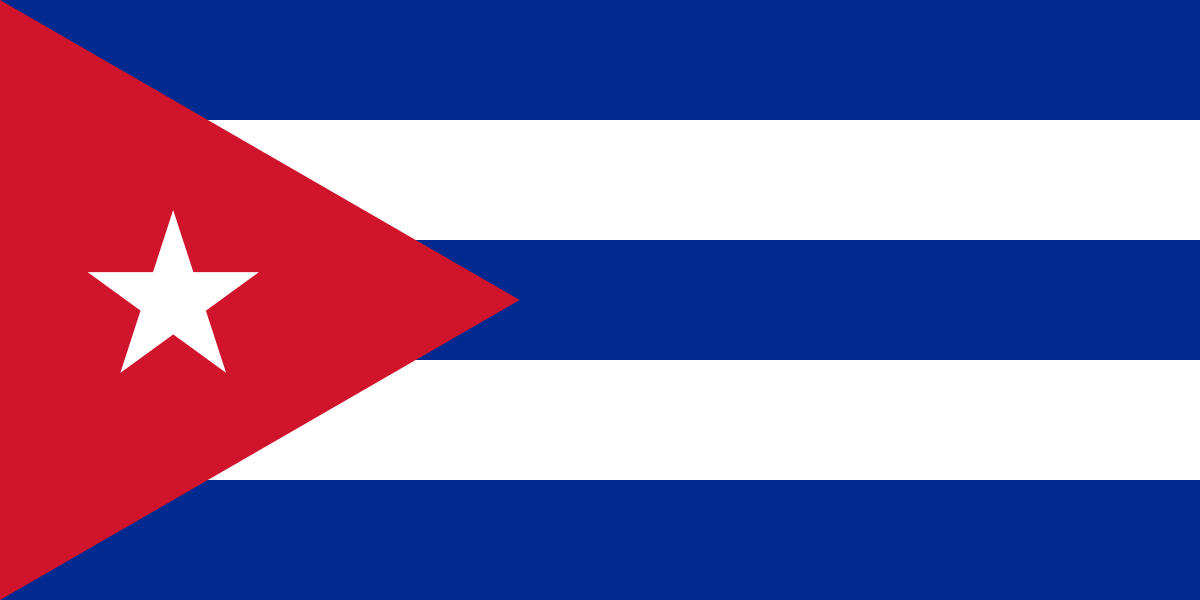
Techsalerator's Weather Data for Cuba provides a comprehensive view of the country's climate landscape. Cuba has a tropical marine climate with two seasons: a dry season from November to April and a wet season from May to October. Trade winds moderate temperatures year-round, keeping Cuba generally pleasant for most of the year. However, Cuba sits in the path of Atlantic hurricanes, and major storms have caused catastrophic damage. Eastern Cuba is slightly drier than the west. This dataset enables businesses, researchers, and governments to understand climate dynamics, weather patterns, and environmental conditions across Cuba's diverse geography.
Top 5 Most Utilized Data Fields
- Temperature & Trade Wind Data: Year-round temperature moderation by northeast trade winds across the island.
- Hurricane Track & Landfall Records: Historical Atlantic hurricane impacts on Cuba, including Category 5 storm data.
- Rainfall & Wet Season Distribution: Seasonal rainfall data across Cuba's provinces for agriculture and water management.
- Drought & Dry Season Indicators: Dry season water stress for sugar, tobacco, and citrus growing regions.
- Sea Surface Temperature & ENSO Data: Caribbean and Gulf SST data linked to Cuban climate variability.
Top 5 Use Cases for Weather Data in Cuba
- Hurricane Disaster Preparedness: Support civil defense evacuation and shelter planning with storm track and intensity data.
- Agricultural Season Management: Optimize sugar cane, tobacco, and citrus production with wet season onset data.
- Tourism Weather Planning: Market Cuba's best winter season weather to European and Canadian tourists.
- Water Resource Management: Track seasonal rainfall to manage Cuba's reservoirs and drinking water systems.
- Coastal Erosion & Sea Level Monitoring: Monitor accelerating coastal erosion from storms and rising sea levels.
Top 5 Locations with Notable Weather Data Trends in Cuba
- Havana: Capital on northwest coast; warmest climate and highest hurricane exposure of Cuban cities.
- Santiago de Cuba: Southeastern city; hotter, drier, and with significant hurricane history.
- Camaguey: Central city; driest large city in Cuba with moderate temperatures.
- Guantanamo: Easternmost province; hot dry climate with the lowest annual rainfall in Cuba.
- Trinidad: Central colonial city; pleasant climate with moderate rainfall and proximity to beach.
Accessing Techsalerator's Weather Data
To obtain Techsalerator's Weather Data for Cuba, contact [email protected] with your specific requirements. A customized quote will be provided based on the data fields, volume, temporal range, and update frequency needed. Datasets are typically available within 24 hours, with ongoing access options for continuous data needs.
Included Data Fields
- Historical & Real-Time Temperature Data
- Precipitation & Rainfall Records
- Wind Speed & Direction
- Humidity & Dew Point Data
- Solar Radiation & UV Index
- Extreme Weather Event Records
- Forecast & Climatological Normals
Techsalerator's Weather dataset is an essential resource for agriculture, energy, insurance, logistics, construction, and research organizations seeking to understand and plan effectively around Cuba's climate conditions.
Weather Data for Cuba
Q: How much does the Weather Data Dataset for Cuba cost?
The cost of the Weather Data Dataset for Cuba depends on factors such as the number of data fields, geographic coverage, temporal depth, update frequency, and total record volume. For an accurate pricing estimate, contact a Techsalerator data specialist who can provide a tailored quote based on your specific needs.
Q: How complete is the coverage of Weather Data in Cuba?
Techsalerator's Weather Data for Cuba provides comprehensive coverage across all major climate zones, geographic regions, and weather variables. The dataset draws from a wide network of ground stations, satellite observations, and reanalysis products to deliver a complete picture of weather conditions throughout the country.
Q: How does Techsalerator collect this data?
Techsalerator gathers Weather Data from diverse, reliable sources including national meteorological services, WMO-affiliated weather station networks, satellite remote sensing platforms, ocean buoy networks, and climate reanalysis datasets. All data is quality-controlled and validated to provide accurate and consistent weather insights for Cuba.
Q: Can I select specific variables, time periods, or geographic regions within Cuba using Techsalerator's Weather Data?
Yes, Techsalerator allows you to filter and customize datasets by weather variable (e.g., temperature, precipitation, wind, humidity), geographic region, specific weather stations, or time period. Work with a Techsalerator representative to configure the dataset to match your exact analytical objectives.
Q: How do I pay for this dataset?
Techsalerator supports multiple secure payment methods, including credit card, direct bank transfer, ACH (Automated Clearing House), and wire transfer. Clients can choose the method that works best for them.
Q: How do I receive the data?
The Weather Data is delivered through secure channels such as FTP, SFTP, S3 bucket, or email. Data formats include JSON, CSV, TXT, NetCDF, or XLS, allowing easy integration into your analytics workflows, GIS platforms, and climate modeling systems.