.png)


Foot Traffic and Mobility Data in South Korea

Foot Traffic and Mobility Data in South Korea

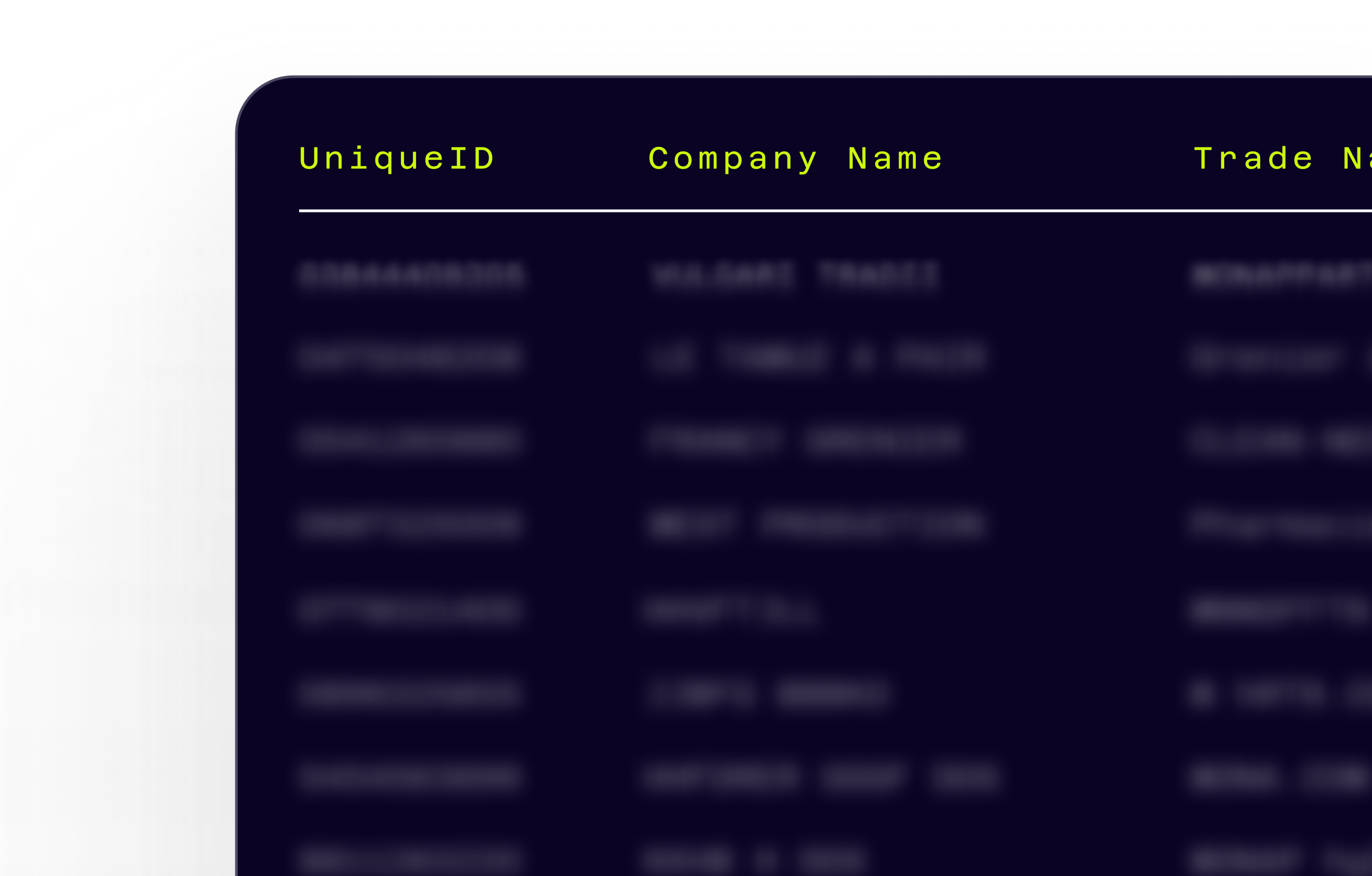
Techsalerator’s Foot Traffic and Mobility Data for South Korea aggregates anonymized mobility signals from multiple sources to provide detailed insights into movement patterns, location visits, and mobility behavior across cities, commercial areas, transportation corridors, and rural regions throughout South Korea.
This dataset enables organizations to analyze population movement, consumer visitation trends, and real-world activity patterns across the country. By combining geospatial and temporal mobility signals, businesses, governments, and researchers can better understand how people move, where they gather, and how activity levels change over time.
Top 5 Most Utilized Data Fields
- Foot Traffic Volume: Measures the number of visits or devices detected at a specific location or point of interest (POI).
- Location Coordinates: Provides precise latitude and longitude data for mapping mobility patterns across South Korea.
- Dwell Time: Tracks the average duration visitors spend at a location, offering insights into engagement levels.
- Time of Visit: Records visit timestamps to analyze peak hours, daily patterns, and seasonal trends.
- Visitor Origin Data: Identifies approximate home or origin areas of visitors, enabling analysis of travel patterns and catchment areas.
Top 5 Use Cases for Foot Traffic and Mobility Data in South Korea
- Retail Site Selection: Identify high-traffic commercial zones and consumer hotspots to determine optimal store locations.
- Urban Planning and Infrastructure Development: Analyze movement patterns and congestion points to improve city planning and transportation networks.
- Tourism and Cultural Site Monitoring: Understand visitor flows to landmarks, cultural centers, and tourist destinations.
- Transportation and Mobility Analysis: Evaluate traffic patterns, commuting flows, and public transport demand across urban and regional areas.
- Event Planning and Public Safety: Monitor crowd density and mobility trends during festivals, concerts, and public events to improve logistics and safety.
Top 5 Locations with Notable Foot Traffic and Mobility Trends in South Korea
- Seoul: Largest concentration of mobility activity, driven by business districts, shopping areas, tourist attractions, and transportation hubs.
- Busan: Strong tourism and commercial foot traffic, especially around coastal markets, beaches, and transport terminals.
- Incheon: Major international transit hub with airport-driven mobility and strong industrial movement.
- Daegu: Elevated retail and cultural mobility, particularly in shopping districts and historic sites.
- Gwangju: Consistent regional movement driven by commerce, education, and intercity transport.
Accessing Techsalerator’s Foot Traffic and Mobility Data
To obtain Techsalerator’s Foot Traffic and Mobility Data for South Korea, contact [email protected] with your specific requirements.
A customized quote will be provided based on data fields, geographic coverage, and volume of records required. Datasets are typically available within 24 hours. Ongoing subscription access and API integrations are also available to support long-term analytics, mobility monitoring, and location intelligence initiatives.
Included Data Fields
- Foot Traffic Volume
- Location Coordinates
- Dwell Time
- Time of Visit
- Visitor Origin Data
- Point of Interest (POI) Category (e.g., Retail, Transportation, Hospitality)
- Visit Frequency
- Device Movement Patterns
Techsalerator’s dataset provides a comprehensive source of mobility intelligence for businesses, policymakers, and researchers seeking to understand real-world activity and movement trends across South Korea, enabling informed, data-driven decision-making.
Foot Traffic & Mobility Data for South Korea
Q: How much does the Foot Traffic & Mobility Data Dataset for South Korea cost?
The cost of the Foot Traffic & Mobility Data Dataset for South Korea depends on factors like the number of data fields, geographic coverage, update frequency, and volume of mobility records required. For an accurate pricing estimate, it is recommended to contact a Techsalerator Data specialist who can provide a tailored quote for your specific needs.
Q: How complete is the coverage of the Foot Traffic & Mobility Data in South Korea?
Techsalerator’s Foot Traffic & Mobility Data for South Korea provides comprehensive coverage across major metropolitan areas, shopping districts, transportation hubs, and smaller towns. The dataset aggregates anonymized mobility signals from multiple sources to give a detailed view of movement patterns, visitation trends, and mobility behavior across the country.
Q: How does Techsalerator collect this data?
Techsalerator collects Foot Traffic & Mobility Data using aggregated and anonymized signals from mobile devices, location-enabled apps, GPS data, and other geospatial sources. The data is analyzed to reveal insights into population movement, consumer visitation trends, and mobility behavior in both urban and rural areas of South Korea.
Q: Can I select specific regions or focus on particular mobility patterns within South Korea using Techsalerator's Foot Traffic & Mobility Data?
Yes. Techsalerator allows you to filter the dataset by regions, cities, or specific types of locations, such as retail centers, transportation corridors, or entertainment districts. This enables organizations to focus on mobility insights most relevant to their operational or research objectives.
Q: How do I pay for this dataset?
Techsalerator provides multiple secure payment options, including credit cards, direct transfers, ACH (Automated Clearing House), and wire transfers. You can select the method that best suits your procurement requirements.
Q: How do I receive the data?
Techsalerator delivers Foot Traffic & Mobility Data through secure channels for easy access and integration. Delivery options include FTP, SFTP, S3 bucket, or email. The data is available in formats such as JSON, CSV, TXT, or XLS, allowing seamless use in analytics platforms and data processing workflows.